Most homeowners searching for 12.5x21x4 air filters hit the same wall: this size doesn't sit on hardware-store shelves. It lives inside older systems, certain builder-grade HVAC setups, and a handful of brand-specific furnaces. When replacement time rolls around, budget-minded families end up paying boutique prices online or forcing in a filter that's half an inch off. Neither option protects your home.
This guide shows you what matters in an affordable 12.5x21x4 filter, how to protect your family without overpaying, and when to swap it out. After ten years of manufacturing filters in American facilities and working with millions of customers, we've watched odd sizes trip up homeowners the same way every time. Here's what actually works.
TL;DR Quick Answers
Best MERV for budget: MERV 8 pleated.
Best MERV for pets or allergies: MERV 11.
Best MERV for asthma or smoke: MERV 13.
Cheapest way to buy: a 6- or 12-pack direct from an American manufacturer.
Replace every: 60–90 days on MERV 8, or 45–60 days on MERV 11 and 13.
Never: substitute a different size, even one that looks close.
Top Takeaways
12.5x21x4 is a non-standard size. Never substitute 12x21x4 or 13x21x4, because either creates bypass gaps that let unfiltered air through.
For most homes, MERV 8 through 13 covers every real filtration need. A higher MERV isn't automatically better.
Pleated media outperforms fiberglass at close to the same monthly cost.
Multi-packs usually cut per-filter cost by 20–40% and solve the sourcing problem for a full year.
Replace every 60–90 days on MERV 8, or every 45–60 days on MERV 11 and 13.
Clean filters cut HVAC energy use by as much as 15%, per the U.S. Department of Energy.
Why 12.5x21x4 Is a Tough Size to Source
Big-box retailers stock about a dozen standard sizes. The 12.5x21x4 isn't one of them. This deep-pleated 4-inch filter format shows up mostly in older systems, builder-grade HVAC installations, and a few brand-specific furnaces. If you're still working out which size your system actually takes, start with choosing the right size for your space before you order anything.
That scarcity pushes homeowners toward substitutes. A filter that's even a half-inch off creates bypass gaps, which defeats the whole point of filtration. Air filters work by pulling airborne particles into dense media as air passes through (see how air filters work). Any gap means unfiltered air slips straight into your HVAC, your ductwork, and the air your family is breathing.
What Actually Matters in a Budget 12.5x21x4 Filter
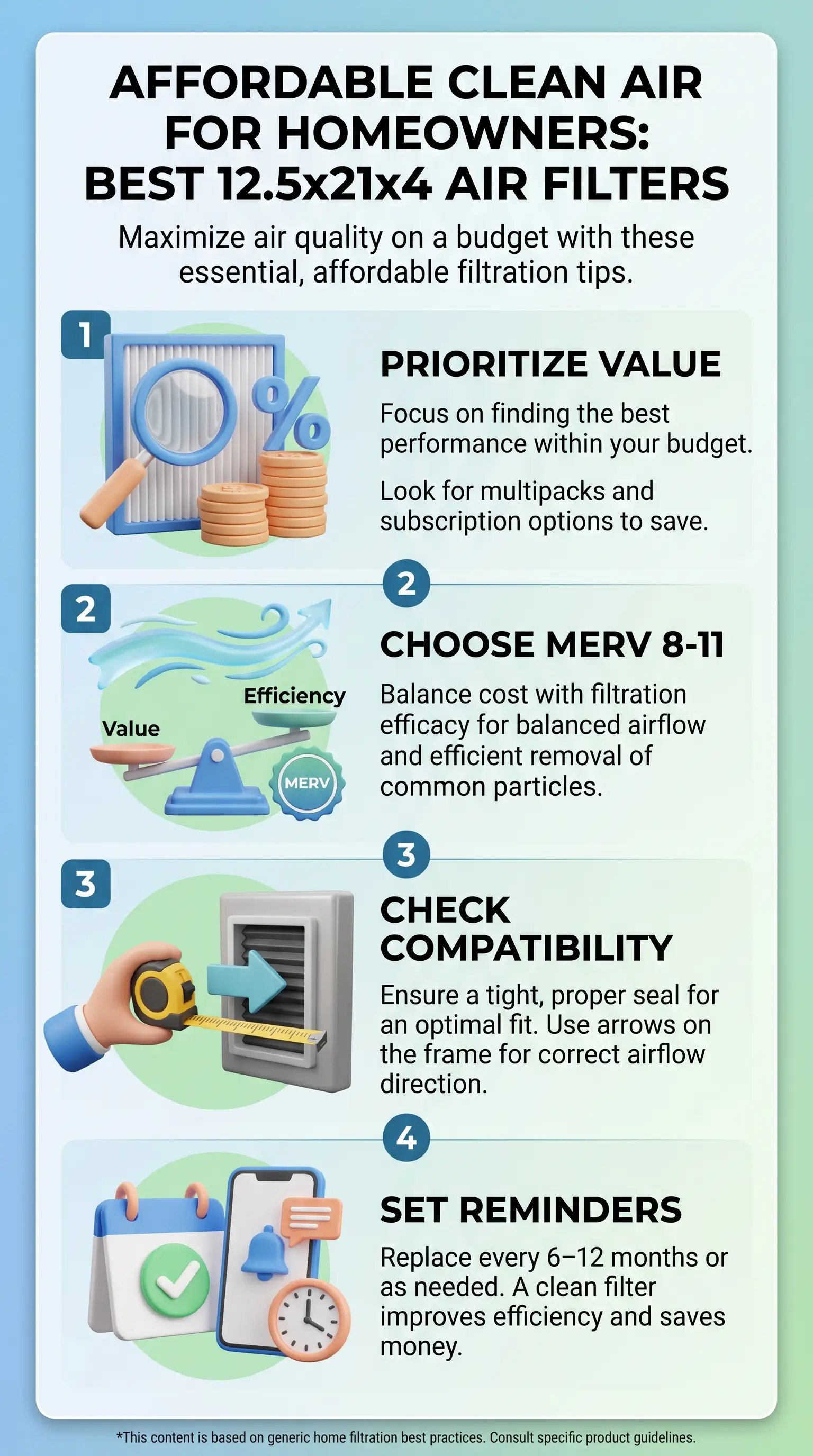
MERV rating. For most homes, MERV 8 through 13 is the sweet spot on the MERV scale. MERV 8 handles dust, pollen, and lint, which works for budget-minded households with no major allergy concerns. MERV 11 steps up for pet owners and mild allergy sufferers. MERV 13 is the right call for families managing asthma, smoke, or severe allergies. In a residential system, don't go higher than MERV 13. Denser media restricts airflow and can actually push your energy bill up. You'll also see some filters carrying a retailer rating alongside MERV. It helps to know how MERV compares to retailer ratings like FPR when you're cross-shopping.
Pleated over fiberglass. Budget-friendly doesn't have to mean fiberglass. Pleated media has far more surface area, lasts longer between changes, and captures finer particles. Once you factor in total cost of ownership instead of sticker price, the cost per month ends up close. Examples across major retailers, including a 5-pack MERV 8 pleated option and a comparable 4-pack, show where the typical budget pleated price range lands when you're sizing up 12.5x21x4 equivalents.
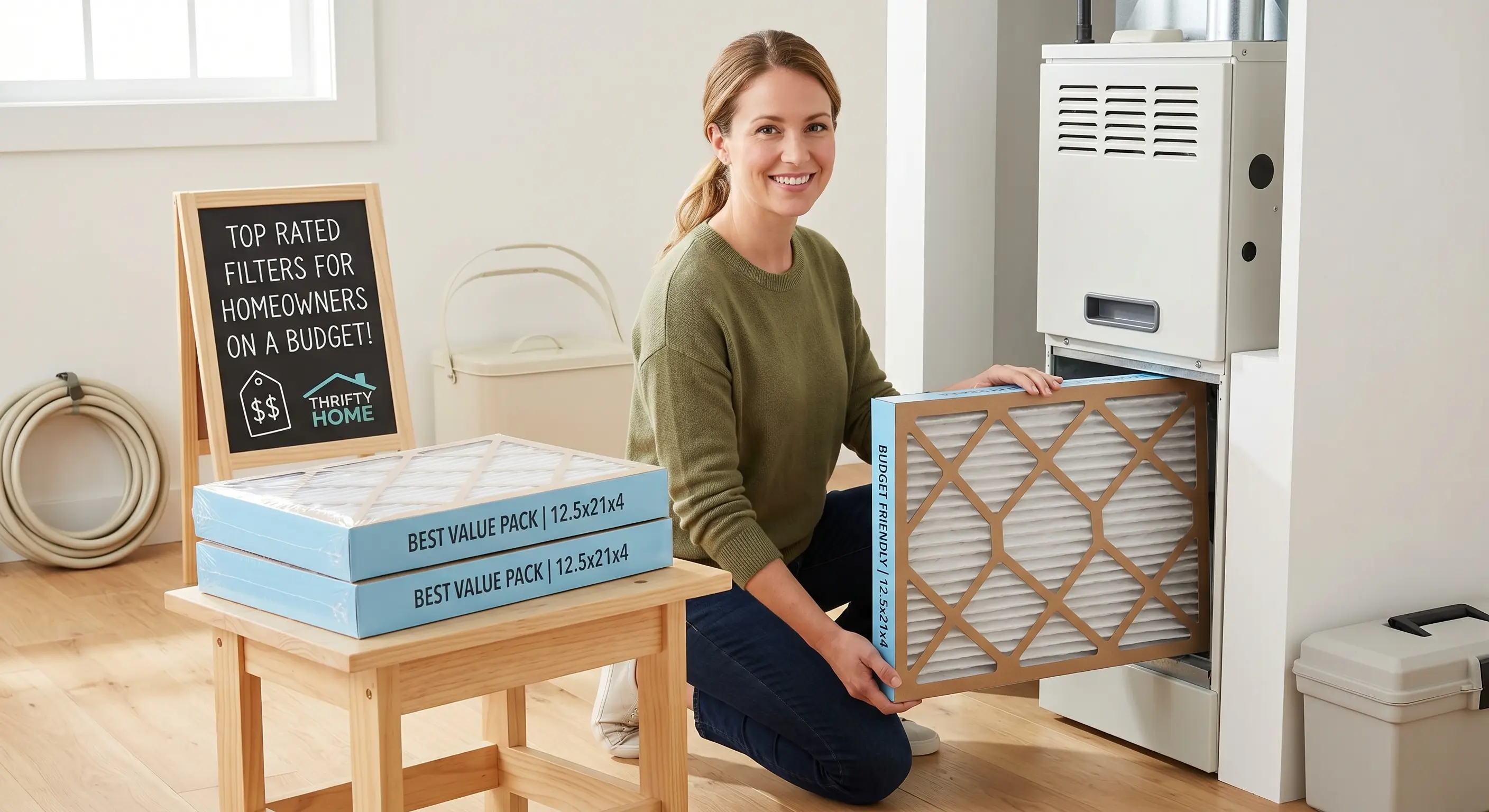
Multi-packs win on value. A 6-pack of 12.5x21x4 filters usually cuts per-unit cost by 20–40% versus singles. For a size that's hard to find locally, buying a year's supply at once is the single biggest budget move a homeowner can make. Multi-pack listings for this exact size show the pattern clearly, and you'll see similar discounting on secondary marketplace listings. The same bulk-buying strategy used for 20x22x4 and other deep-pleated sizes applies directly to 12.5x21x4.
Verify the size. 12.5x21x4 is a nominal size. Actual dimensions are usually a touch smaller so the filter slides in properly. Before you order, pull the old filter and confirm the size printed on the frame. Forcing a 12x21x4 or 13x21x4 into the same slot creates the same bypass gaps we flagged above.
For American-made filters in every MERV option with multi-pack pricing, homeowners can find this exact size direct from the manufacturer.
How Often to Replace a 12.5x21x4 Filter
In a typical apartment or small home, replace MERV 8 every 60–90 days. For MERV 11 and 13, every 45–60 days. Shorten those intervals if you have pets, smokers, run AC heavily in humid climates, or have just finished any remodeling work. If you're not sure whether it's time, look for the telltale signs a filter is ready to be replaced. A full replacement cadence guide can also help you build a schedule that fits your household.
“After ten-plus years making filters in American facilities, we keep seeing the same pattern on odd sizes like 12.5x21x4: the costly mistake has nothing to do with MERV selection. It happens when homeowners give up on finding the right fit and run the system with whatever filter happens to be close, or no filter at all. Buy the correct size once, in a multi-pack, and your wallet and your family's air stop competing.”
Essential Resources
For anyone who wants to go deeper on indoor air quality, filtration standards, and HVAC efficiency, here's where we send people. Each source below sits on its own domain and comes from a government agency, health nonprofit, or recognized standards body (no filter retailers):
EPA Indoor Air Quality Hub — the federal authority on indoor pollutants, ventilation, and filtration for homes: epa.gov/indoor-air-quality-iaq
CDC NIOSH Ventilation Guide — health-agency guidance on filtration, airflow, and HVAC improvements inside homes and buildings: cdc.gov/niosh/ventilation/about
ENERGY STAR: Heat & Cool Efficiently — the official federal guide to HVAC efficiency, including filter replacement cadence: energystar.gov/saveathome/heating-cooling
ASHRAE Technical FAQ on MERV Ratings — from the American Society of Heating, Refrigerating and Air-Conditioning Engineers, the body that defines MERV: ashrae.org (Technical FAQ 61 PDF)
American Lung Association: Clean Air Indoors — plain-English health guidance on what dirty indoor air does to your body and how to clean it up: lung.org/clean-air/indoor-air
DOE Energy Saver: Air Conditioner Maintenance — the U.S. Department of Energy's consumer guide to AC filter maintenance and seasonal upkeep: energy.gov/energysaver/air-conditioner-maintenance
Statistics Worth Knowing
These numbers come straight from federal agencies. They explain why filter selection matters far more than most homeowners realize:
Americans spend about 90% of their time indoors. Per the EPA, that makes the air inside your home almost all of your daily exposure, not just a small slice of it. Source: EPA Indoor Air Quality
Indoor pollutant concentrations can run 2 to 5 times higher than outdoor levels, and sometimes more than 100 times higher. EPA human-exposure studies confirm this. Without proper filtration, your home's air can be worse than the air outside. Source: EPA Reference Guide for Indoor Air Quality
Replacing a dirty filter can cut HVAC energy consumption by 5% to 15%. Per the U.S. Department of Energy (via ENERGY STAR), swapping a $10 filter on schedule is one of the highest-payback home maintenance moves a homeowner can make. Source: ENERGY STAR Heat & Cool Efficiently
Final Thoughts and Opinion
Here's what ten-plus years of making filters for American homes has taught us. Buying budget-friendly doesn't have to mean buying cheap. For a non-standard size like 12.5x21x4, the cheapest-looking path is almost always the most expensive one over time. Ill-fitting substitutes, skipped replacements, coil damage, humidity and condensation problems from dirty filters, and degraded indoor air all stack up fast. The downstream effects of a dirty filter inside your home are bigger than most homeowners realize. The real budget play is simple. Buy the right size, the right MERV, in a multi-pack, from a source that makes this size routinely. Do that once, set a quarterly reminder on your phone, and you've solved the 12.5x21x4 problem for a full year. Usually for less than the cost of a single night out.
Clean air works like an invisible foundation. It sits underneath how well your family sleeps, breathes, and recovers from the day. Every homeowner has the chance to be the prudent protector of their household's air. For an odd-size filter buyer, the single most empowering move is refusing to settle for "close enough."
Frequently Asked Questions
Where can I buy a 12.5x21x4 air filter?
You won't find this size on a big-box shelf. It ships from specialty manufacturers that handle custom and non-standard dimensions. Buying direct from an American manufacturer in a multi-pack is the most budget-friendly route.
Is 12.5x21x4 a standard air filter size?
No. It's a non-standard, deep-pleated 4-inch size, most commonly found in certain older furnaces and builder-grade HVAC systems. That's exactly why local retailers rarely stock it.
What MERV rating should I use in my apartment or home HVAC?
MERV 8 for standard homes, MERV 11 for pet owners and mild allergies, MERV 13 for asthma, smoke, or severe allergies. Confirm your system can handle your chosen MERV. Older units sometimes struggle above MERV 11.
How long does a 12.5x21x4 air filter last?
60–90 days for MERV 8, and 45–60 days for MERV 11 and 13. Shorten those intervals if you have pets, smokers, or you run your system hard during peak humidity or cold snaps.
Can I use a 12x21x4 filter instead of a 12.5x21x4?
Don't. Even a half-inch gap creates bypass airflow, which sends unfiltered air straight into your HVAC and your home's air supply. That defeats the whole point of filtration. Running a system without proper filtration, even for a month, measurably damages HVAC components.
Are pleated filters worth the extra cost over fiberglass?
Yes. Pleated media lasts longer, captures far more fine particles, and costs close to the same per month of use once you factor in lifespan.
You shouldn't have to hunt across three stores (or overpay at the fourth) just to keep your family breathing clean air.
Tap here to see current multi-pack pricing on this exact size and handle your next year of replacements in a single order. Better air for all starts with the right fit, and you're one click away.
Learn more about HVAC Care from one of our HVAC solutions branches…
Filterbuy HVAC Solutions - Miami FL - Air Conditioning Service
1300 S Miami Ave Apt 4806 Miami FL 33130
(305) 306-5027
https://maps.app.goo.gl/Ci1vrL596LhvXKU79